7 Essential Bike Repair Tools Every Cyclist Should Own
Most riders need fewer tools than the big kits suggest, and the right ones fall into three groups: a home workshop set, a pocket-sized kit for the road or trail, and a few specialist pieces for jobs like brake bleeding and bolt torque. Start with the basics (tire levers, a multi-tool, and a reliable way to inflate), then add specialist gear as your wrenching grows. Most beginners can handle a flat, a saddle adjustment, and a quick drivetrain tweak with a short list.
In the interest of transparency, we earn a commission on some purchases made through links on this site. As an Amazon Associate I earn from qualifying purchases.
We picked these seven tools by asking what a real repair needs, from a flat on a Tuesday commute to a spongy lever before a weekend ride. The DURATECH 41 Pieces Bicycle Repair Tools anchors a home setup, while the Gerber Truss Multi-Tool and Park Tool TL-1.2 Tire Lever Set cover everyday carry and flat fixes. The LEXIVON Torque Wrench 1/2-Inch Drive Click 10~150 Ft-Lb/13.6~203.5 Nm protects your bolts, the AstroAI L7 Tire Inflator Portable Air Compressor,150 PSI Cordless speeds up inflation, the CHUMXINY Brake Bleed Kit for Shimano restores hydraulic disc brake feel, and the 27 Piece Bike Tool Kit rounds things out compactly.
Each pick below comes with a plain-language explanation and an expert repair tip. Got a favourite tool we missed? Bring it to the forum and tell the community what earns its place in your bag.
How We Chose These Essential Bike Tools
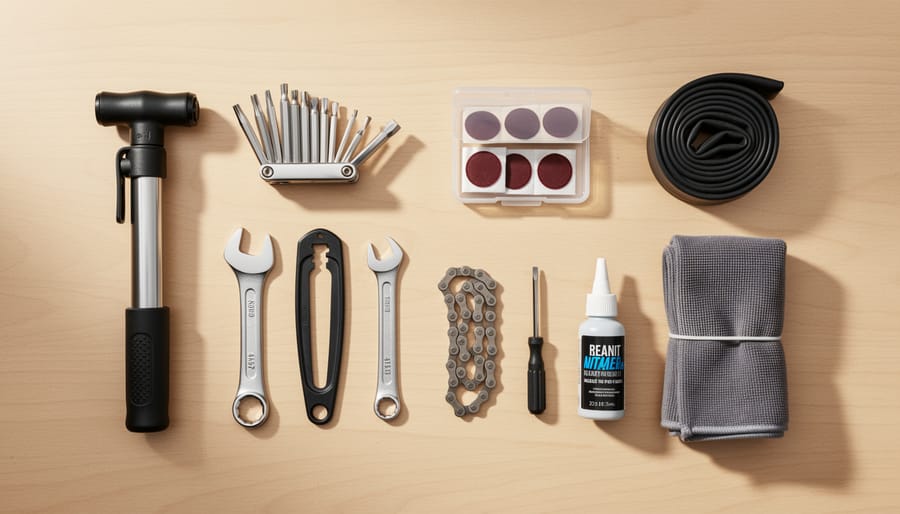
Picking tools for a bike is really about matching the job to the place you’ll do it. A kit that lives on your workbench has different demands than something that rides in your saddle bag, so we sorted candidates by where they’d actually get used, then weighed them against a handful of practical filters.
- Versatility: how many common repairs the tool or kit can handle.
- Rider skill level: whether a beginner can use it confidently or it suits a seasoned home mechanic.
- Ratings and review volume: a high score matters more when many customers are behind it.
- Portability: how easily it fits in a bag, pocket, or camp kit.
- Fit for common repairs: flats, bolt tightening, tire pressure, and brake care.
We also checked that each pick is currently in stock, since a great tool you can’t buy doesn’t help anyone. We don’t quote prices here, because listings change often and we’d rather keep this advice useful long after a sale ends.
A few terms come up along the way. A tire lever is a small, flat tool that pries a tire off the rim so you can reach the tube. A torque wrench tightens a bolt to an exact, measured amount so you don’t crack a part or leave it loose. Bleeding a brake means flushing air out of a hydraulic brake line so the lever feels firm again.
1. DURATECH 41 Pieces Bicycle Repair Tools, Best for a Complete Home Workshop Starter Set

If you’re setting up a proper home workshop, a broad kit with a storage box is hard to beat, and the DURATECH 41 Pieces Bicycle Repair Tools set is a good example of the type. It has a 4.4 out of 5 rating from 1,099 customer ratings and shows as in stock right now.
The appeal is simple: one box, one place to look. A kit like this is built for the everyday jobs that pile up on a home bike: nudging a saddle height, tightening a loose bolt, tweaking the cockpit, or making small drivetrain adjustments. You won’t reach for a different tool every five minutes, and that matters when you’re still learning what your bike actually needs. If you want a good first job to practice on, learn to clean your chain and check the drivetrain bolts while you’re down there.
Here’s my expert repair tip: put every tool back in its slot when you finish. It sounds fussy, but a tidy box tells you at a glance what’s missing, and it keeps small bits from wandering off into the garage floor. Before you turn any bolt, seat the bit or key fully in the head and make sure it fits snugly. A loose fit is how hex and Torx heads get rounded, and a stripped bolt turns a two-minute job into an afternoon.
A kit like this is the sensible home base. Pair it later with a few specialist pieces, like a torque wrench, as your confidence grows.
2. Gerber Truss Multi-Tool, Best for Everyday Carry and Quick Fixes

A compact multi-tool earns its place the moment something rattles loose three miles from the car. The Gerber Truss folds hex keys, drivers and other small tools into one pocket-sized body, so it’s easy to leave in a saddle bag, a jersey pocket or a camping pack. If you ride and also hike or camp, one tool can cover the bike, the stove bracket and the loose strap on your pack, which is a big part of why it suits everyday carry.
Shoppers seem to agree. The Gerber Truss holds a 4.6 out of 5 rating from 5,340 customer ratings, and it’s currently in stock.
So when is a multi-tool enough? For small adjustments, it usually is: nudging a saddle, straightening a handlebar, snugging a loose bolt, or tweaking a lever angle so your hands stay comfortable. It starts to feel limited on longer jobs, where a short handle and awkward leverage make stubborn or deeply recessed bolts a chore. For drivetrain work, wheel truing or anything that needs real leverage, a full kit on your workbench is the better choice. Many riders do both, keeping a multi-tool on the bike and a bigger set at home.
Expert repair tip: before every ride, do a quick bolt check. Lightly test the stem, handlebar, seatpost clamp and any bottle cage bolts with the correct hex key. You’re not cranking them down, just confirming nothing has backed off. Catching a slightly loose bolt in the driveway beats discovering it on a descent.
How do you carry yours? Tell us in the Bike Know How forums.
3. Park Tool TL-1.2 Tire Lever Set, Best for Flat Tire Repairs

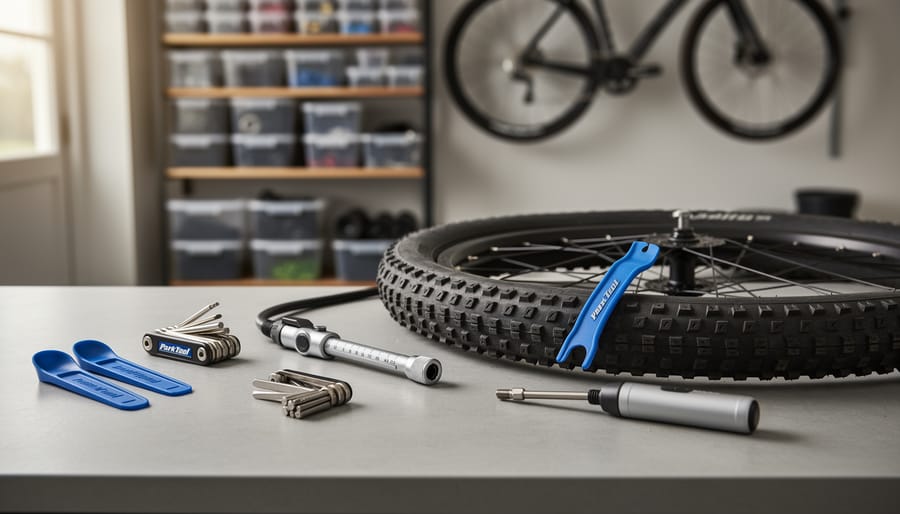
Tire levers are the unsung heroes of a flat repair. These small, curved tools slip between the tire bead and the rim, letting you pry the tire off without stabbing your tube or gouging the rim with a screwdriver. That’s why the Park Tool TL-1.2 Tire Lever Set earns its spot here as the pick best suited to flat tire repairs. It has a 4.6 out of 5 rating from 3,447 customer ratings, and it’s currently in stock.
If you’re new to this, the job is simple. Hook one lever under the bead, snap the other a few spokes over, and work around until one side of the tire is free. For a full walkthrough, our guide on how to repair bike tires covers every step from patching to reseating.
Here’s the expert tip that saves the most grief: seat the tube carefully before you re-mount the tire. Add just enough air to give the tube shape, then tuck it fully inside the tire so nothing is trapped under the bead. Before you reach for the lever to finish the last stretch, push the final section of tire on with your thumbs whenever you can. Levers are great for removal, but using them to wrestle the tire back on is the classic way to pinch the tube and cause a pinch flat, those twin “snakebite” holes. Inflate slowly and check that the bead sits evenly on both sides before you go to full pressure.
Got a flat-fixing trick that works every time? Share it with fellow riders in the Bike Know How forums.
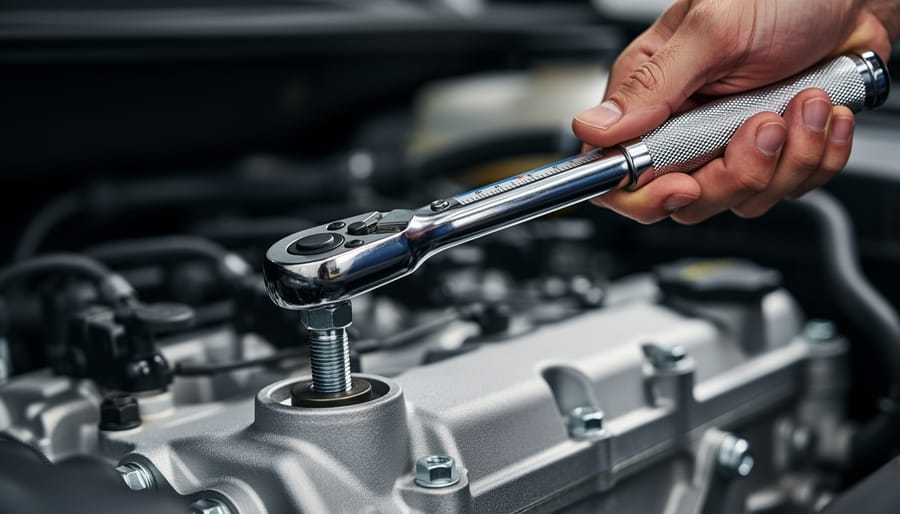
4. LEXIVON Torque Wrench 1/2-Inch Drive Click 10~150 Ft-Lb/13.6~203.5 Nm, Best for Precise Bolt Tightening

Torque is simply how hard you twist a bolt, and on a bike it matters more than most riders expect. Too loose, and a stem, seatpost clamp or crank bolt can slip or work free mid-ride. Too tight, and you risk stripping threads, crushing a carbon seatpost, or cracking a lightweight component. A torque wrench takes the guesswork out of that balance.
A click-type torque wrench is the easiest style to learn. You set your target number on the handle, tighten until you feel and hear a distinct “click,” and stop right there. That click means you’ve hit your setting, so you can’t accidentally keep cranking.
The LEXIVON Torque Wrench 1/2-Inch Drive Click 10~150 Ft-Lb/13.6~203.5 Nm earns its spot on the list for its precision and its 4.7 out of 5 rating from 11,800 customer ratings. It’s in stock as of this writing.
Here’s the honest caveat: this is a larger-range wrench. Its listed span of 10~150 ft-lb (13.6~203.5 Nm) is built for heavier-duty fasteners, while many bike bolts call for far less. Before you buy, check the torque specs your components call for and make sure that range actually suits small bike fasteners. If most of your bolts sit at the low end, a smaller-range wrench may be a better fit.
Once you’ve matched the wrench to your parts, set it, tighten smoothly, and stop at the click. Got a torque-spec cheat sheet you swear by? Share it in the Bike Know How forums.
5. AstroAI L7 Tire Inflator Portable Air Compressor,150 PSI Cordless, Best for Fast Tire Inflation at Home
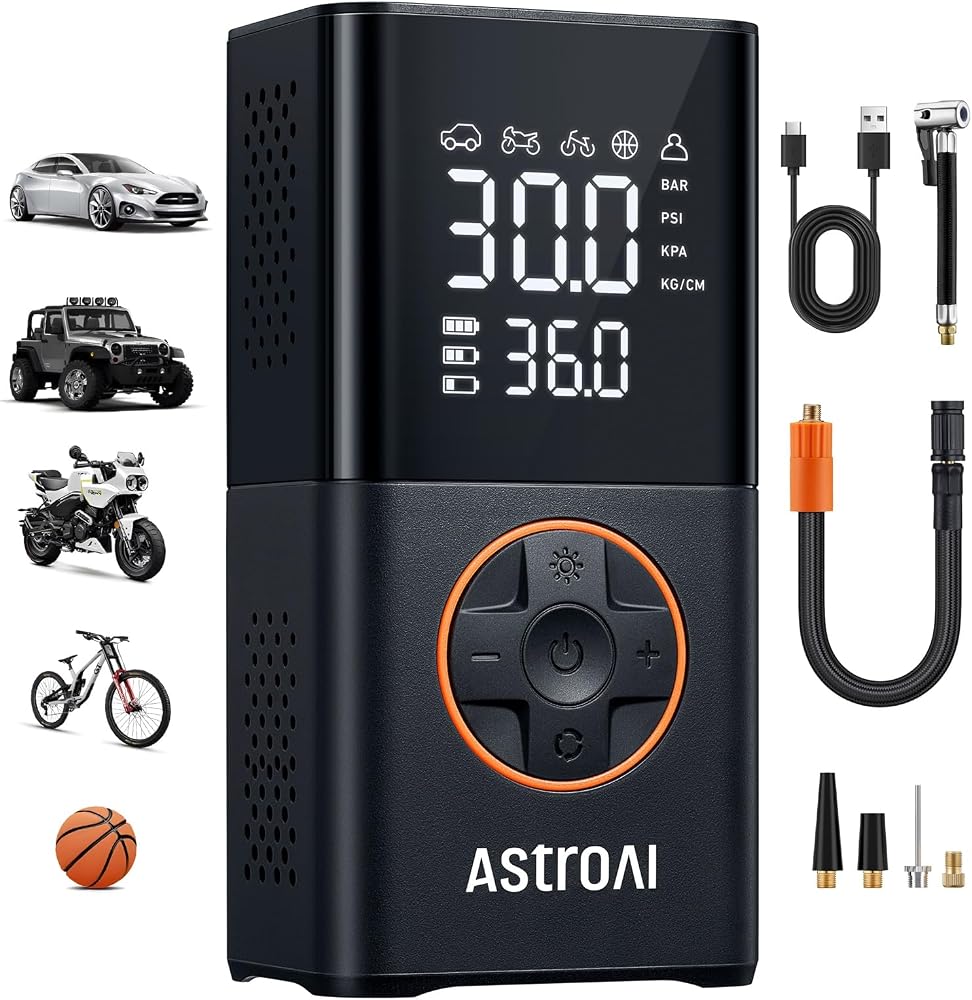
The AstroAI L7 is the pick for riders who’d rather not wrestle a hand pump every time they head out. It’s a cordless inflator with a 150 PSI rating, built to top up tires at home or from the trunk of your car before a ride. Think of it as a garage helper rather than a pocket pump. It’s too bulky to carry in a jersey or saddle bag, so you’ll still want a compact pump or CO2 option for roadside emergencies.
Customers rate it 4.3 out of 5 from 18,629 ratings, and it’s currently in stock. That’s a big pool of feedback for a tool you’ll probably use more often than almost anything else in your kit, since tires lose air naturally between rides.
Before you plug in, check two things. First, your valve type. Presta valves are the slim ones with a small locking nut at the tip, common on road and many mountain bikes. Schrader valves look like the ones on a car tire, wider and with a spring-loaded pin. Make sure the inflator’s head or adapter fits the valve you actually have. Second, read the recommended pressure range printed on your tire’s sidewall. A 150 PSI ceiling doesn’t mean you should go anywhere near it. Most bike tires call for far less, and going over the printed maximum risks a blowout or a rim failure.
Expert repair tip: Pump a little short of your target, then check with your thumb and a gauge. It’s easier to add air than to let it out, and small adjustments make a noticeable difference in ride feel.
6. CHUMXINY Brake Bleed Kit for Shimano, Best for Maintaining Hydraulic Disc Brakes
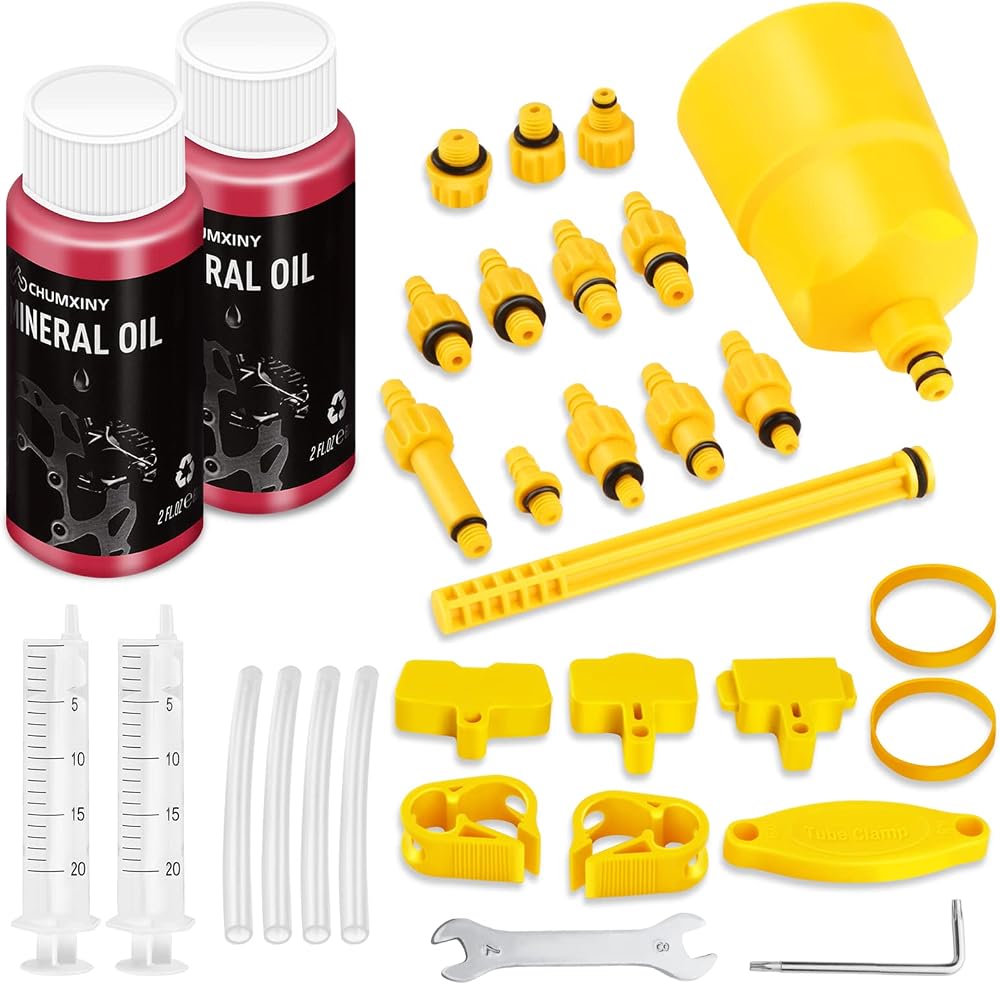
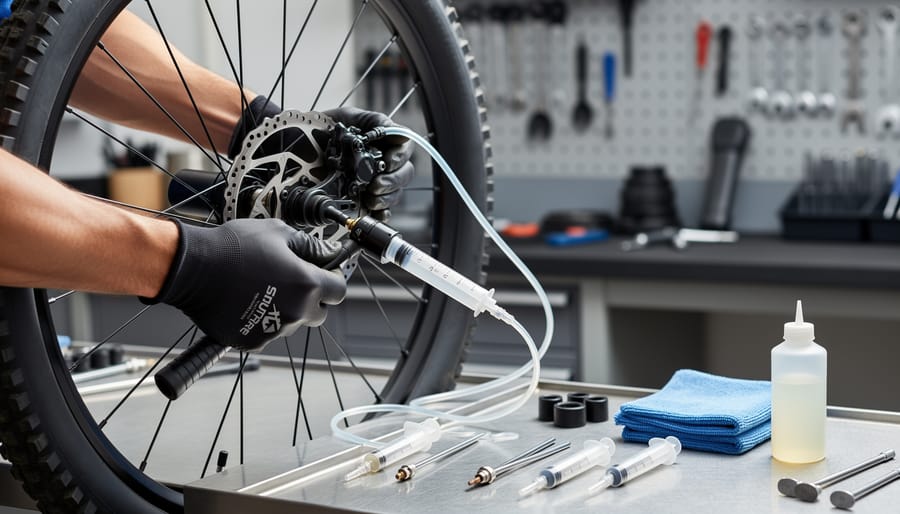
When your brake lever starts to feel spongy, pulling closer to the bar than it used to before the pads bite, air has usually found its way into a hydraulic disc brake system. Bleeding is the process of pushing fresh fluid through the lines to chase that air out, which restores a firm, consistent lever feel. It’s a routine bit of maintenance, and one of the more satisfying jobs to learn at home.
The CHUMXINY Brake Bleed Kit is built for exactly this. It works with Shimano and TEKTRO hydraulic disc brakes, and it comes with 120ml of high performance mineral brake fluid, so you’re not hunting for the fluid separately. It carries a 4.5 out of 5 rating from 4,747 customer ratings and is currently in stock.
One check matters before you buy: confirm your brakes run on mineral oil rather than DOT fluid. Shimano systems typically use mineral oil, but many other brands rely on DOT fluid, and the two are not interchangeable. Look for a note on the brake lever, the reservoir cap, or in the manufacturer’s manual if you’re unsure.
Here’s a handy expert repair tip: lay down an old rag or cardboard under the bike before you start, and wipe the rotor with a clean cloth afterward. Take your time, work slowly, and watch for air bubbles rising out of the system. If a spongy lever persists after a careful bleed, that’s worth a closer look at the pads and hoses.
Have you tackled a first bleed at home? Swap your tips in the Bike Know How forums.
7. 27 Piece Bike Tool Kit, Best for a Compact, Budget-Friendly Maintenance Set

Not everyone needs a kit with 41 pieces. If your garage is small, your budget is tight, or you mostly handle the basics, the 27 Piece Bike Tool Kit is a lighter way to get core coverage without a big footprint. It carries a 4.5 out of 5 rating from 290 customer ratings and is currently in stock. That’s a smaller pool of reviews than the bigger-name picks above, so treat the rating as encouraging rather than definitive.
Who should pick it over the 41-piece set? Riders who want a tidy, compact maintenance set and don’t expect to rebuild a drivetrain on the kitchen table. Think commuters, weekend riders, and anyone setting up their very first toolbox. It suits the everyday jobs: nudging a saddle height, tightening a loose stem or handlebar bolt, adjusting fenders or racks, and basic cockpit tweaks.
Here’s a tip from the workshop: always match the bit or wrench to the bolt head snugly before you turn it. A loose fit rounds out the fastener, and a stripped bolt turns a two-minute job into an afternoon. Take your time and seat the tool fully every time.
Because a compact set can’t do everything, pair it with a good set of tire levers so you can fix a flat without wrestling the tire off with a screwdriver. Add a torque wrench later if you start working on carbon parts.
Which tools do you reach for most? Drop your own compact-kit setup in the Bike Know How forums and see what other riders keep in their drawers.
Which Tools Fit Your Riding Style? A Quick Comparison
Not every rider needs the same kit, so here’s how the picks line up by riding style. Ratings come from customer reviews, and I’ve left prices out so the advice holds up as listings change.
| Tool | Rating | Best use |
|—|—|—|
| DURATECH 41 Pieces | 4.4 / 5 (1,099 ratings) | Home mechanic starter workshop |
| Gerber Truss Multi-Tool | 4.6 / 5 (5,340 ratings) | Commuter and bikepacker carry |
| Park Tool TL-1.2 Tire Lever Set | 4.6 / 5 (3,447 ratings) | Flat repairs, any rider |
| LEXIVON Torque Wrench | 4.7 / 5 (11,800 ratings) | Home mechanic bolt checks |
| AstroAI L7 Inflator | 4.3 / 5 (18,629 ratings) | Pre-ride top-ups at home |
| CHUMXINY Brake Bleed Kit | 4.5 / 5 (4,747 ratings) | Mountain biker disc brake care |
| 27 Piece Bike Tool Kit | 4.5 / 5 (290 ratings) | Compact, lighter home kit |
Commuters and weekend road riders can get by on the multi-tool and tire levers, plus a way to inflate. Mountain bikers will want the brake bleed kit sooner, since hydraulic discs see hard use. Bikepackers should lean on the Gerber for its small footprint, while home mechanics get the most from the bigger kits and the torque wrench. Whatever you pick, pair it with good habits on the road, and our guide to cycling safety is a solid next read.
Essential Bike Repair Tools: Your Questions Answered
What bike tools does a beginner need first?
Start with a set of tire levers, a pump or inflator, and a decent multi-tool. That trio handles flats, tire pressure and most small adjustments, and you can add a full kit later as your confidence grows.
Can a multi-tool replace a full tool kit?
For quick roadside fixes, yes. A multi-tool covers loose bolts and minor tweaks, but it can’t match the leverage and reach of proper hex keys and wrenches, so most home work is easier with a dedicated kit.
Why do torque wrenches matter on a bike?
Many components, especially carbon parts, have a maximum tightening limit. A click-type torque wrench signals when you’ve hit the target, which helps prevent slipping parts, stripped bolts and cracked components.
How often should hydraulic disc brakes be bled?
There’s no fixed schedule, so go by feel. If the lever turns spongy or pulls closer to the bar than usual, air has likely crept into the line and it’s time for a bleed.
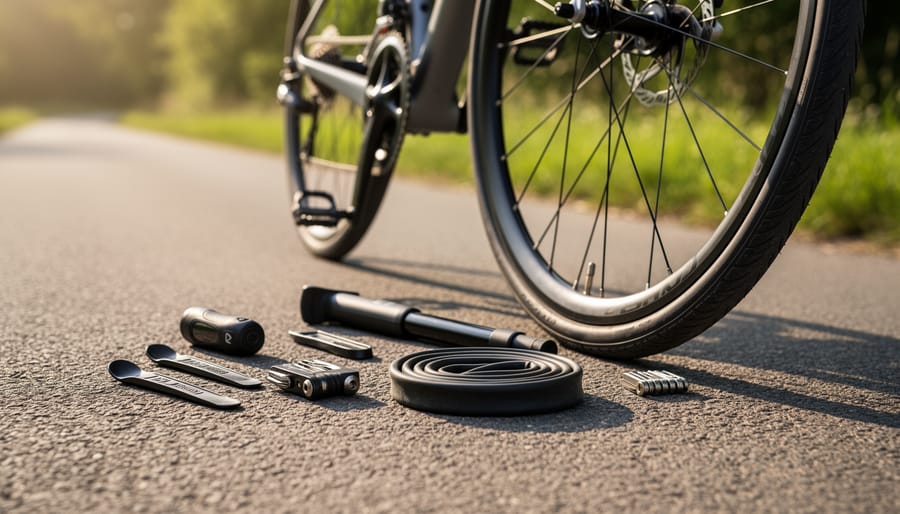
As for what to carry on a ride, keep it light: a spare tube, tire levers, a compact pump or CO2 inflator, and a multi-tool. If you’re heading far from home, a small patch kit is cheap insurance too. Always check that your multi-tool includes the hex sizes your bike actually uses before you rely on it.
Your setup probably looks different from ours, and that’s the fun of it. Drop by the Bike Know How forums and tell us what’s in your saddle bag or on your workshop bench. Beginners and old hands alike pick up great ideas from each other’s tool-kit setups.
Building Your Tool Kit Over Time: Final Takeaway
Every rider’s kit starts somewhere, and it doesn’t need to be big. Grab a set of tire levers like the Park Tool TL-1.2, a compact multi-tool such as the Gerber Truss, and a pump or inflator, and you’ve covered most flats and roadside tweaks. As your confidence grows, add a torque wrench for precise bolt tightening and a brake bleed kit to keep hydraulic discs feeling crisp.
There’s no single right toolbox, and plenty of experienced mechanics built theirs one repair at a time. Check what your components call for before you buy, and take your time learning each job.
Now we’d love to hear from you. Head over to the Bike Know How forums and tell us which tools you couldn’t live without, what you wish you’d bought sooner, and what’s still sitting unused in your drawer. Your picks might be exactly what another rider needs to hear.