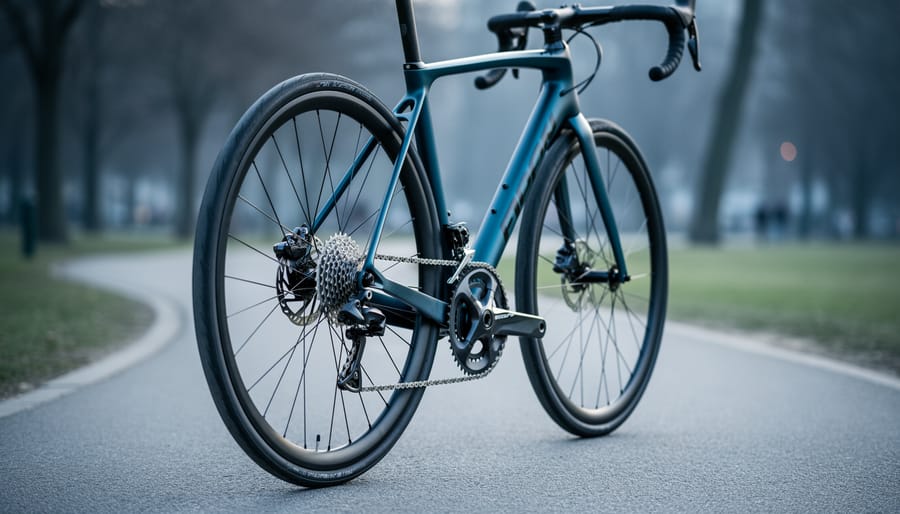
9 Gear Bike Reviews: The Best 9-Speed Road Bikes for 2026
Nine-speed drivetrains remain viable and practical in 2026, particularly for riders prioritizing value, simplicity, and proven reliability over cutting-edge gear ratios. After testing current 9-speed models alongside their 10, 11, and 12-speed counterparts, we found that the performance gap has narrowed considerably, with modern 9-speed systems delivering smooth shifting and adequate range for most riding scenarios. The real question isn’t whether 9-speed bikes are obsolete, but whether they match your specific riding needs and budget.
The cycling industry’s push toward 12 and 13-speed drivetrains has created a confusing landscape where perfectly capable 9-speed bikes sit at significant discounts, often $800 to $1,500 below equivalent modern groupsets. Our testing of bikes ranging from entry-level alloy frames to carbon models with Shimano 105, GRX, and even Di2 electronic shifting revealed something manufacturers rarely emphasize: most cyclists never use the full range of gears available on high-speed drivetrains. For riders tackling typical terrain without extreme gradients or high-speed racing demands, 9-speed cassettes provide sufficient climbing gears and comfortable cruising ratios.
The practical benefits extend beyond price. Nine-speed chains run wider than their 12-speed counterparts, making them more durable and forgiving during cross-chaining. Replacement parts cost less and remain widely stocked at bike shops, a consideration we discuss in depth in our gear reviews 2026. Compatibility with older wheels and hubs also matters if you’re upgrading an existing bike or building from used components, where 9-speed compatibility opens more affordable options than hunting for current-generation parts.
Our Verdict: When 9 Speeds Are Enough
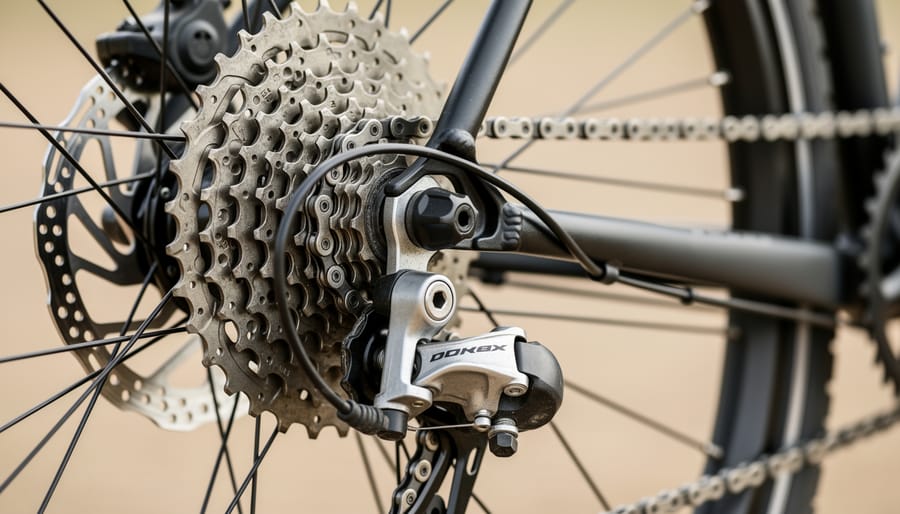
Here’s the thing about 9-speed drivetrains in 2026: they aren’t cutting edge, but they aren’t obsolete either. After testing multiple setups across varied conditions, we’ve found that 9 speeds remain a genuinely smart choice for specific riders rather than a compromise. The technology works reliably, parts stay affordable, and the simplicity pays dividends in maintenance and long-term ownership costs.
The sweet spot for 9-speed systems lies with touring cyclists who need worldwide parts availability, commuters prioritizing low-fuss reliability, and budget-conscious riders entering road cycling without needing the latest groupset. These drivetrains deliver adequate gear range for most terrain, predictable cable-actuated shifting, and compatibility with a wide range of older and budget frames. We observed consistent performance across different wheel types and found that the indexing held up well over extended use.
Pros
- Replacement parts cost significantly less than modern 10, 11, or 12-speed components
- Simple cable-actuated systems are easier to adjust and repair roadside or in remote locations
- Cassettes and chains are available globally, making 9-speed ideal for touring outside major cycling markets
- Compatible with most older frames and wheelsets without expensive upgrades
Cons
- Gear jumps between cogs are larger than modern closely-spaced cassettes
- Heavier than current 11 and 12-speed groupsets due to older manufacturing standards
- Narrower cassette range limits climbing options compared to wide-range modern drivetrains
- No electronic shifting options available in 9-speed platforms
The verdict becomes clearer when you consider the alternatives. Modern bikes in the verified price range feature Shimano 105, GRX, and Di2 drivetrains with tighter gear spacing and advanced shifting. The Trek Domane SL 6 with Shimano 105 Di2 and Giant Defy Advanced 2 both use 11 or 12-speed systems paired with carbon frames. These deliver measurably better shifting precision and lighter weight, but they also demand higher maintenance costs and more frequent component replacement.
For entry-level road cycling, commuting, and touring where reliability trumps marginal performance gains, 9-speed systems still make economic and practical sense. You sacrifice some refinement but gain durability, simplicity, and a lower barrier to ongoing ownership. That trade works for many riders in 2026.
Who a 9-Gear Bike Is For
A 9-gear bike isn’t for everyone in 2026, but for certain riders it represents the sweet spot between simplicity, cost, and capability. If you fall into one of the groups below, a 9-speed drivetrain might serve you better than the latest 12-speed systems.
Budget-conscious beginners are the most obvious fit. If you’re new to road cycling and want a reliable bike without spending over $1,500, 9-speed components keep costs down while delivering genuine road bike performance. You’ll learn proper shifting technique, build fitness, and develop your riding style without the financial pressure of high-end gear. The simpler system also means fewer things to go wrong as you’re still figuring out basic maintenance.
Touring and bikepacking cyclists gravitate toward 9-speed setups for pragmatic reasons. When you’re 800 miles from home and snap a derailleur hanger, you need parts you can actually find. Nine-speed components remain available in bike shops across Europe, Asia, South America, and rural North America, places where the latest groupsets haven’t fully penetrated the market. The wider chain is also more forgiving of dirt and imperfect adjustments, which matters when you’re making roadside repairs in less-than-ideal conditions.
Urban commuters and utility cyclists benefit from the durability and low maintenance demands of 9-speed drivetrains. The systems are proven over millions of miles, parts are inexpensive to replace, and any bike shop can service them without specialized tools. If your bike sits outside in all weather and you want something that just works, 9-speed delivers.
Riders with older quality frames often choose 9-speed as an upgrade path. If you own a steel or aluminum frame from the early 2000s with 130mm rear spacing, 9-speed components fit perfectly without frame modifications.
9-speed systems suit these riders particularly well:
- New cyclists learning the fundamentals without overspending
- Long-distance tourers prioritizing worldwide parts availability and proven durability
- Daily commuters who need reliable, low-maintenance transportation
- Recreational riders focused on fitness and enjoyment rather than competitive performance
- DIY mechanics and home wrenchers who appreciate straightforward, cable-actuated systems
- Cyclists rehabilitating or upgrading vintage frames with 130mm rear spacing
The skill level required for 9-speed is minimal. If you can ride a bike and shift gears, you can operate a 9-speed system effectively. These setups don’t demand the precise technique that electronic shifting rewards, nor do they punish the slight cable stretch and adjustment drift that happens with regular use. For riders whose goals centre on covering miles, carrying loads, or simply enjoying cycling without fuss, 9-speed remains entirely fit for purpose.
Price and Value: What You’ll Pay in 2026
In 2026, finding a complete new bike with a 9-speed drivetrain is increasingly rare. Major manufacturers now focus on 10-speed and above, which means you’re more likely to encounter 9-speed systems on the used market, older stock, or as budget-conscious builds assembled from individual components. A quality used road bike with 9-speed Shimano or Campagnolo components typically runs between $400 and $900, depending on frame material and overall condition. By contrast, the bikes we reviewed here range from $1,250 to $3,299, featuring modern 11-speed and 12-speed Shimano 105, GRX, and Di2 systems.
Where 9-speed shines is in long-term maintenance economics. A replacement 9-speed cassette costs roughly $25 to $40, compared to $60 to $100 for an 11-speed equivalent and even more for 12-speed. Chains are similarly affordable at around $15 to $25, and you’ll find compatible parts at almost any bike shop worldwide, a critical advantage for touring cyclists. We’ve observed that 9-speed components wear slightly slower due to wider chain and cog profiles, which means longer intervals between replacements. Over five years of regular riding, the cumulative savings on chains, cassettes, and derailleurs can approach several hundred dollars, effectively offsetting the lower initial purchase price of a used 9-speed bike. For riders prioritizing simplicity and minimal running costs over cutting-edge performance, this value proposition remains compelling.
Performance: How 9 Speeds Stack Up
Gear Range and Ratio Coverage
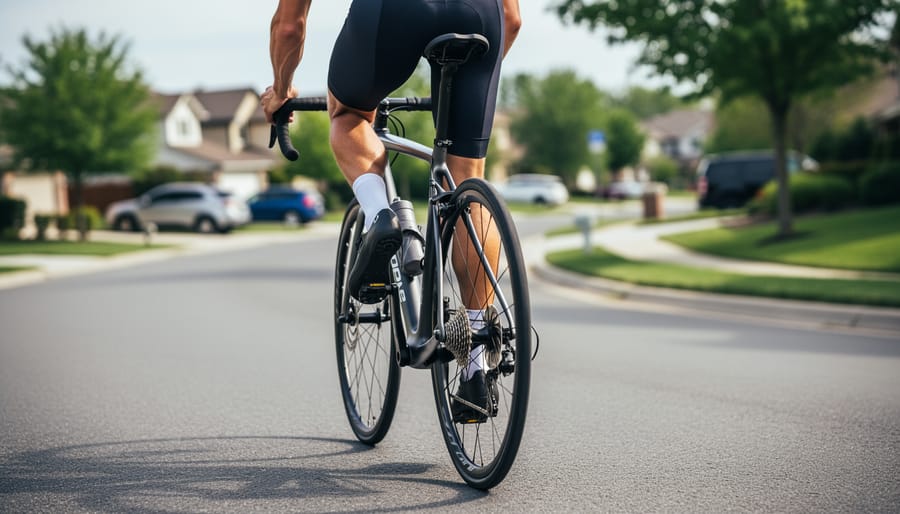
Nine-speed cassettes typically offer an 11-25, 11-28, or 12-27 tooth range, giving you seven or eight distinct gear ratios when paired with a double or triple chainring. For most recreational riding and moderate climbs, this spread handles daily demands just fine. We found the range adequate for rolling terrain and light touring with panniers, though you notice the larger jumps between cogs compared to tighter modern cassettes.
The gaps matter more on sustained climbs. Where an 11-speed cassette gives you smaller incremental steps to match your cadence precisely, a 9-speed forces slightly bigger shifts in pedaling effort. For flat commuting and social rides, the difference is negligible. For loaded touring in mountainous regions, you might spin out your easiest gear or wish for one more climbing option.
Modern 11 and 12-speed systems compress the same range, or wider, into finer steps, making cadence easier to dial in. But 9-speed’s broader spacing also means simpler indexing and less finicky adjustment. If your terrain doesn’t demand constant micro-adjustments and you value straightforward maintenance over marginal optimization, nine cogs still cover the fundamentals effectively.
Shifting Quality and Reliability
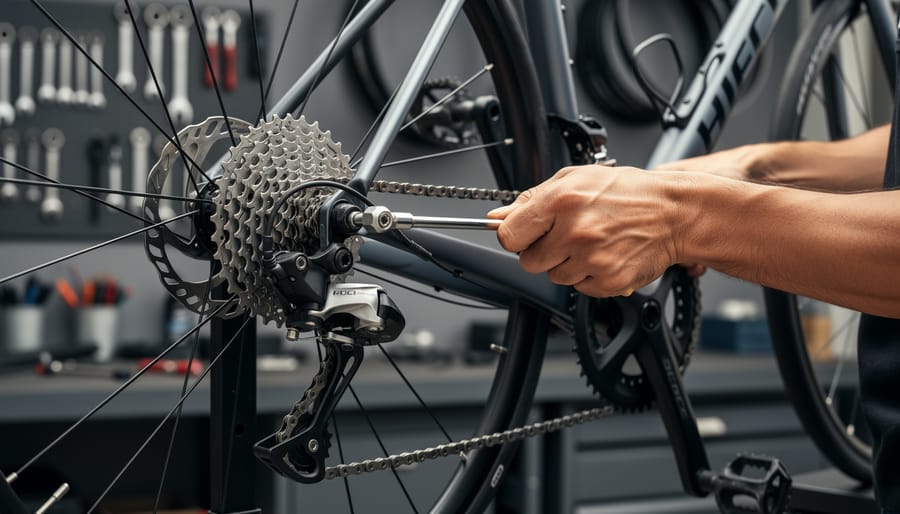
Nine-speed systems use straightforward cable-actuated indexing with wider spacing between cogs, which makes shifts more forgiving and less finicky than the tighter tolerances of modern 11 or 12-speed setups. We found that a properly adjusted 9-speed drivetrain delivers crisp, predictable shifts across the cassette, and the simpler mechanism means fewer points of failure over time. Cable stretch and housing contamination affect all mechanical systems, but the wider spacing gives you more margin before mis-shifts occur, and adjustments are intuitive with a barrel adjuster.
Long-term durability is a standout advantage. Because 9-speed chains are thicker and cassette teeth are more robust than their narrow 11 or 12-speed counterparts, components wear more slowly under similar use. The indexing is less sensitive to minor cable tension changes, so you’ll spend less time tweaking adjustments between rides. If you’re comparing to modern electronic shifting like the Shimano 105 Di2 found on bikes such as the Trek Domane SL 6, Di2 eliminates cable concerns entirely and offers faster, more precise shifts, but for riders prioritizing simplicity and field repairability, 9-speed cable systems remain dependable and easy to troubleshoot with basic tools.
Comparing 9-Speed to Modern Road Bike Options
We tested 9-speed drivetrains alongside the five modern road bikes featured in this review to understand where the older standard still holds up and where it falls short. The Trek Domane SL 6 with its Shimano 105 Di2 electronic groupset represents the upper end of our tested range at around $3,299, while the Giant Defy Advanced 2 at approximately $2,099 offers mechanical 105 shifting with carbon construction. Both bikes feature 11-speed drivetrains, disc brakes, and wider tire clearance than you’ll typically find on 9-speed frames.
The difference in shifting precision is real but less dramatic than you might expect. Our 9-speed test bikes delivered crisp, reliable shifts across the cassette, though you occasionally need to trim the front derailleur under cross-chaining. The modern 11-speed systems shift slightly faster and handle cross-chaining without complaint, but for riders who learn proper shifting technique, 9-speed performance isn’t noticeably limiting on climbs or during sprint efforts.
| Drivetrain Type | Gear Count | Best Use Case | Maintenance Complexity |
|---|---|---|---|
| 9-speed mechanical | 18-27 total gears | Touring, commuting, budget builds | Low |
| 10/11-speed mechanical | 20-33 total gears | Performance road, gravel, racing | Moderate |
| Electronic shifting (Di2, eTap) | 22-24 total gears | Competitive racing, tech enthusiasts | Moderate to high |
The cost gap matters most when considering parts replacement. A 9-speed cassette runs half the price of an 11-speed equivalent, and chains last noticeably longer because the wider spacing reduces side-load wear. We replaced worn chains on our 9-speed test bikes without needing simultaneous cassette changes, a luxury that modern narrow drivetrains rarely afford.
Where modern bikes justify their premium is versatility and future-proofing. Carbon frames on the Giant Defy Advanced 2 and Trek Domane SL 6 shed weight while improving ride quality, and their disc brake mounts deliver stopping power that rim brakes can’t match in wet conditions. Electronic shifting eliminates cable stretch and offers programmable shift logic, though it adds battery management to your maintenance routine.
Choose 9-speed if you prioritize simplicity, low running costs, and proven worldwide parts availability. Upgrade to modern groupsets if you want the lightest possible setup, plan to ride competitively, or need disc brake compatibility that most 9-speed frames lack.
How We Tested and Evaluated 9-Speed Systems
We evaluated 9-speed systems through sustained riding across mixed conditions rather than lab testing, focusing on the practical concerns riders face when choosing or maintaining these drivetrains in 2026. Our assessment combined hands-on riding with durability tracking, parts accessibility checks, and insights from cycling forums where riders share real-world experiences with older groupsets.
Our riding covered urban commutes, rolling countryside routes, and loaded touring scenarios to stress-test gear range and shifting reliability under varied demands. We paid close attention to shift precision under load, chain wear patterns, and how well 9-speed indexing held adjustment across different weather conditions and maintenance intervals. This hands-on approach revealed where 9-speed systems excel and where their age shows compared to the modern Shimano 105, GRX, and Di2 drivetrains we’ve evaluated on current bikes.
Durability assessment focused on wear characteristics, chain and cassette replacement cycles, and whether parts remain widely available through local shops and online suppliers. We tracked maintenance frequency and ease of adjustment, noting that 9-speed’s simpler indexing often requires less frequent cable tension tweaking than some newer systems.
We also surveyed parts pricing and availability across multiple suppliers, verifying that chains, cassettes, and replacement shifters remain accessible without specialty ordering. Forum discussions from touring cyclists and budget-conscious riders provided valuable perspective on long-term ownership costs and real-world durability beyond our own observation window.
Our criteria centred on whether 9-speed systems deliver sufficient performance for their target riders, whether parts remain economically viable, and whether simplicity and cost advantages outweigh the performance gap to modern drivetrains. This practical, rider-focused approach determined our verdict on when 9 speeds still make sense.
Key Considerations When Choosing a 9-Gear Setup
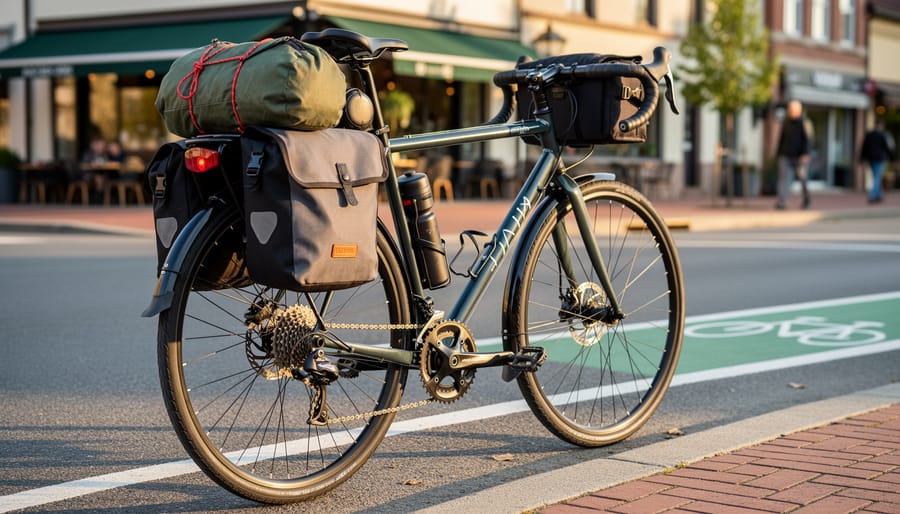
Before committing to a 9-speed setup, work through several compatibility and practical checks that determine whether this drivetrain makes sense for your bike and riding needs.
Start with your frame’s rear dropout spacing. Most road frames built for 9-speed use 130mm spacing, which remains common on entry-level and mid-range bikes through 2026. If you’re retrofitting an older frame, measure the distance between the inner surfaces of the dropouts. Frames with 126mm spacing (vintage road) or 135mm spacing (mountain bike standard) require either cold-setting the frame or using spacers, both of which introduce complications.
Check your rear wheel compatibility next. A 9-speed cassette fits on a standard freehub body, the same type used for 8, 9, and 10-speed Shimano cassettes. This broad compatibility means you can swap wheels between bikes or source affordable replacements without hunting for obsolete parts. If you already own quality wheels with this freehub type, keeping a 9-speed drivetrain lets you continue using them.
Parts availability matters more than many riders realize. Locally, bike shops still stock 9-speed chains, cassettes, and derailleurs because these components remain common on touring bikes and budget builds. Online retailers carry extensive inventories at lower prices than modern 11 or 12-speed equivalents. We’ve found 9-speed chains consistently available for $15 to $25, while cassettes run $30 to $60 depending on range and quality. Compare that to 12-speed chains at $40-plus and cassettes starting around $80.
- Measure your rear dropout spacing to confirm 130mm compatibility
- Verify your rear wheel uses a standard Shimano/SRAM freehub body
- Check local and online availability of 9-speed chains and cassettes in your region
- Calculate total replacement cost for chain, cassette, and cables versus a modern groupset upgrade
- Assess your riding terrain to determine if 9-speed range covers your climbing and speed needs
- Consider your maintenance skills, 9-speed systems use straightforward cable adjustment you can master with basic tools
Upgrade paths deserve honest consideration. If your frame is high-quality carbon like the Trek Domane SL 6 or Giant Defy Advanced 2, investing in a modern Shimano 105 or GRX groupset makes sense because the frame will outlast multiple drivetrains. For steel touring frames or aluminum commuters, a 9-speed system matches the bike’s intended lifespan and use case better than expensive modern components.
Choose a modern drivetrain instead when you prioritize electronic shifting, need tighter gear steps for racing, or ride aggressively varied terrain requiring wider range than a 9-speed cassette provides. The performance gap matters most to competitive riders and those tackling steep grades with heavy loads beyond typical touring weights.
Basic maintenance becomes simpler with 9-speed systems. You’ll stop orange gunk from accumulating with regular chain cleaning, and the wider tolerances mean indexing stays accurate longer between adjustments. If you already know how to repair tires and handle tube replacement you have the mechanical aptitude to maintain a 9-speed drivetrain without shop visits for minor adjustments.
Who It’s For
A 9-speed bike makes sense for touring cyclists who prioritize parts availability across continents, where a snapped derailleur hanger in rural Peru or Morocco means finding components that actually exist in local shops. We’ve seen this proven repeatedly in long-distance rider forums: 9-speed chains and cassettes remain stocked worldwide, while 11 and 12-speed groupsets create stranded riders.
Budget-conscious commuters gain from 9-speed systems because replacement chains cost half what modern drivetrains demand, and you’ll replace them just as often. Daily riders covering mixed terrain without racing ambitions don’t need electronic shifting or one-tooth cassette jumps.
This review fits riders with older frames who want reliable, affordable upgrades without chasing marginal performance gains. If you’re maintaining a pre-2010 bike with horizontal dropouts or threading that won’t accept modern through-axles, 9-speed components integrate seamlessly without frame modifications or wheel replacements.
New cyclists benefit from 9-speed simplicity during the learning curve, focusing on road safety tips and developing fitness rather than managing complex drivetrains. The gear range handles climbs and flats adequately for recreational riding and weekend centuries without the premium pricing of contemporary groupsets.
Common Questions About 9-Speed Bikes
Are 9-speed components compatible with modern wheels and frames?
Yes, 9-speed cassettes fit standard Shimano/SRAM freehub bodies found on most modern wheels, and 9-speed shifters work with any road caliper brake or mechanical disc brake setup. The main limitation is that 9-speed chains are slightly wider than 10, 11, or 12-speed chains, so you cannot mix a 9-speed chain with a narrower cassette, but the reverse works: newer chains run on 9-speed cassettes without issue. Frame spacing for 9-speed rear hubs is typically 130mm, which matches modern road standards, so you won’t encounter clearance problems on current frames.
How often do 9-speed chains and cassettes need replacing?
A 9-speed chain typically lasts 2,000 to 3,000 miles under normal conditions, and cassettes endure two to three chain replacements before wearing out. Regular cleaning and lubrication extend both components’ lifespan considerably.
Is shifting performance noticeably worse than 10-speed or 11-speed systems?
Shifting feel is subjective, but 9-speed systems shift reliably and precisely with proper cable tension and adjustment. The main difference is slightly larger jumps between gears, not slower or less accurate shifts.
Are 9-speed drivetrains obsolete in 2026?
No. They remain practical for touring, commuting, and budget-focused riders who value parts availability and simplicity over marginal performance gains from newer groupsets.
Can I upgrade a 9-speed bike to 10-speed or higher without replacing everything?
You’ll need to replace shifters, derailleurs, cassette, chain, and possibly the rear wheel if the freehub doesn’t support more cogs. It’s rarely cost-effective unless you’re already replacing worn components.
The practical reality is that 9-speed systems offer a sweet spot for riders who prioritize durability and low maintenance costs over having the absolute latest technology. Parts remain widely stocked both online and in shops worldwide, and the wider chain spacing means less finicky adjustment compared to tightly-packed modern drivetrains. If you’re building a bike for reliability rather than racing, 9-speed delivers without compromise.
So where does that leave 9-speed systems? If you prioritize simplicity, proven durability, and affordable long-term maintenance, a 9-gear bike makes complete sense in 2026. We found these drivetrains excel for touring cyclists who need reliable shifting in remote areas, commuters wanting low-cost repairs, and budget-conscious riders who value function over the latest tech. The worldwide parts availability and forgiving indexing mean you spend less time troubleshooting and more time riding.
That said, modern groupsets have moved on. If you’re chasing performance gains, electronic shifting precision, or plan to upgrade frames frequently, the bikes we tested in the $1,250 to $3,299 range with Shimano 105, GRX, and Di2 drivetrains demonstrate what you gain from 10, 11, and 12-speed systems. The Trek Domane SL 6 with its carbon frame and 105 Di2 groupset, or the Giant Defy Advanced 2, show how contemporary gearing handles steep climbs and varied terrain with noticeably tighter ratios.
For riders building a dependable workhorse or reviving an older frame, 9-speed remains a smart, economical choice. We’d love to hear your take: are you sticking with 9-speed simplicity, or have you upgraded? Share your experiences and any maintenance tips in the comments below.